Chapter 3 - Consecration in a Cultural Season: Being Set Apart in a Season of Mixture
- Dr. Lisa Hill
- Dec 11, 2025
- 17 min read
3.1 — The Call to Consecration in a Cultural Feast
Why God often confronts believers in seasons the culture celebrates. How consecration is not withdrawal, but alignment.
There is a reason you feel the tension more intensely during seasons of cultural celebration. God often chooses feast days—days when the world is loud, indulgent, nostalgic, and distracted—to draw His people into deeper consecration. Not because He despises celebration, but because He desires holy celebration, celebration aligned with truth rather than sentiment, worship rather than noise, devotion rather than distraction. When culture feasts in the flesh, God often calls His people to feast in the Spirit. When the world magnifies tradition, He magnifies truth. When society immerses itself in distraction, He invites His own into devotion.
This is a pattern throughout Scripture. God marked Israel with consecration at Passover, even as Egypt was celebrating its power. He called the prophets into consecration during Israel’s festivals, when the nation was intoxicated with its own rituals. Jesus Himself withdrew from crowds during festival seasons—not to escape people, but to align Himself with the Father. The early Church consecrated itself in prayer during feast days when Jerusalem was consumed with celebration.
Consecration is rarely convenient. It is always timely.
Cultural feasts magnify the places where allegiance is divided. They expose where sentiment has more authority than Scripture, where tradition has more influence than truth, where nostalgia competes with holiness, and where the heart is tempted to drift toward mixture. God confronts believers in these seasons not to shame them, but to reclaim them—to pull them out of the current before it carries them into compromise. He confronts because He loves. He disturbs comfort because He desires purity. He awakens conviction because He intends to align.
Many believers misunderstand consecration, imagining it as withdrawal, isolation, or rejection of the world. But biblical consecration is not escape—it is alignment. It is being set apart unto God in the midst of a world that has lost its way. It is not refusing to participate in celebration; it is refusing to participate in celebration that does not honor Christ. It is not removing yourself from people; it is removing yourself from the patterns that shape people. Consecration is not running away—it is standing differently.
Consecration means your affection is reoriented, your priorities recalibrated, your imagination sanctified, and your rhythms re-ordered around Christ instead of culture. It means you no longer drift with the tide; you walk against it with clarity and conviction. It means you hear a different drumbeat in a season when everyone else is dancing to the music of sentiment and consumerism. It means you experience holy discomfort while others experience nostalgia—and that discomfort is not immaturity; it is evidence of the Spirit’s work.
God confronts believers during cultural feasts because feasts reveal foundations. They expose what people celebrate. They expose what people value. They expose what people worship. And they expose what people are willing to compromise in order to maintain belonging.
Consecration is God’s way of reclaiming your belonging—not to a holiday, but to Himself.
When God calls you higher during a season culture celebrates, it is a sign of maturity, not over-sensitivity. It is a sign that He is distinguishing you. He is marking you. He is preparing you for deeper obedience and stronger discernment. He is aligning your rhythms with His Kingdom, not the calendar. You are not losing joy; you are rediscovering holy joy. You are not pulling away from celebration; you are stepping into celebration that is actually sacred.
Consecration realigns you. Culture distracts you. Conviction awakens you. Christ anchors you.
In a season when the world is loud, consecration teaches you to listen differently. In a season when the world is indulgent, consecration teaches you to desire differently. In a season when the world is sentimental, consecration teaches you to see differently. In a season when the world is decorated, consecration reveals what has been buried beneath tradition.
This is why the Spirit is stirring you now. This is why Christmas feels different. This is why your heart is being pulled out of mixture and into clarity. This is why you feel set apart—not isolated, but assigned.
Consecration is not God taking you out of the season. It is God taking you deeper into Christ during the season.
3.2 — The Difference Between Sanctification and Consecration
Sanctification and consecration are often confused, yet they are profoundly different works of God—distinct, complementary, and sequential. Sanctification is the ongoing process by which the Holy Spirit cleanses, heals, purifies, and restores the believer. It deals with what must be removed: sin, compromise, mixture, woundedness, unholy attachments, and distorted desires. Sanctification is God reclaiming territory in the heart. It confronts what defiles, uproots what harms, and exposes what contaminates. It is a stripping away of everything that conflicts with God’s nature, a holy cleansing that frees the believer from what once bound them. In sanctification, God says, “Be clean.”
Consecration, however, is something altogether different. Where sanctification removes, consecration claims. It is not the cleansing of the vessel but the claiming of it. Consecration is God’s declaration that what He has purified now belongs entirely to Him—set apart, marked, distinguished, reserved for His purpose and His glory. Consecration does not dismantle; it reassigns. It takes the areas sanctification has purified and places them under a new ownership. In consecration, God says, “Be Mine.” It is the moment in which He takes what has been made holy and assigns it to His Kingdom. Rather than dealing with what contaminates, consecration establishes what defines. Sanctification prepares the temple; consecration fills it.
For this reason, sanctification is a transformative work, while consecration is a positional one. Sanctification changes who you are—your thoughts, your desires, your reactions, your spiritual sensitivities. Consecration changes whose you are—your identity, your allegiances, your rhythms, your boundaries, your assignments. Sanctification makes you holy; consecration makes you His. Sanctification reveals Christ in you; consecration demands Christ through you. The transformation of sanctification reshapes your inner world, but the marking of consecration reaches outward to claim your entire life—your decisions, your atmosphere, your seasons, your celebrations, your family patterns, and your daily conduct.
This distinction explains what is happening in you right now. You are not merely being sanctified; you are being claimed. You are not just maturing in your understanding of Christmas; the Holy Spirit is marking this season in your life as territory He now owns. This is why your convictions feel sharper, your discernment stronger, your boundaries clearer, your spirit more sober, and your heart more consecrated. This is not simply growth—it is divine assignment. God is not only cleansing your view of this holiday; He is re-signing it under His authority. He is not only transforming your understanding; He is reordering your allegiance. He is not only teaching you truth; He is positioning you for obedience.
Consecration is not a feeling; it is a calling. It is the holy claim of God upon a life He has sanctified. It is the moment He says, “You are no longer available for mixture, nostalgia, compromise, or cultural shaping. You are Mine.” Sanctification restores. Consecration reassigns. Sanctification removes the old. Consecration establishes the new. And this is the distinct work happening in you now—not simply the cleaning of your heart, but the claiming of your life. The Spirit is not merely sanctifying your season; He is consecrating your identity.
3.3 — When God Marks You in a Season Others Celebrate in the Flesh
There is a unique kind of loneliness that comes when God marks you in a season the world celebrates in the flesh. You begin to feel out of sync with the atmosphere around you—more sober while others are festive, more alert while others are sentimental, more awake while others are indulging. What once felt harmless now feels heavy. What once stirred nostalgia now stirs conviction. This dissonance can feel confusing if you do not recognize it for what it is: the evidence of consecration. When God sets you apart, the rhythms that once moved you no longer carry the same power. The music of the culture no longer matches the cadence of your spirit. The lights and festivities that charm the world do not charm you, not because you have lost joy, but because your joy is being relocated—transferred out of earthly celebration and anchored in heavenly reality.
When God marks a believer, their senses sharpen. They begin to see and feel what others overlook. They discern mixture where others see magic, deception where others see tradition, idolatry where others see harmless fun. They do not despise people; they simply cannot participate in what no longer aligns with who they are becoming. This inner shift is not immaturity—it is prophetic sensitivity. God is not making you rigid; He is making you aware. He is teaching you to live by the Spirit instead of sentiment, by truth instead of nostalgia, by devotion instead of habit. And this awareness feels like weight—not the weight of religion, but the weight of glory settling upon your life.
This “holy dissonance” is a prophetic sign. Throughout Scripture, God often marked His people at moments when the culture around them was celebrating in the flesh. Noah was called to build in a season of indulgence. Moses was consecrated in a nation feasting on idolatry. The prophets were awakened while Israel was enthralled by its own festivals. Even Jesus Himself withdrew during feast days—not because the celebrations were inherently evil, but because the Father was doing something deeper inside Him. Whenever God marks someone, He separates their inner atmosphere from the world’s outer atmosphere. Your spirit becomes attuned to heaven while the world remains tuned to the earth.
This separation is not alienation; it is preparation. You feel the weight because God is entrusting you with clarity. You feel the sobriety because He is aligning you with His heart. You feel the difference because He is inviting you into devotion that does not depend on tradition for meaning. You feel the tension because the Spirit is loosening you from cultural rhythms that can no longer sustain your calling. Many will not understand this shift, but understanding is not the measure of obedience—alignment is.
What you are experiencing is not emotional distance from celebration; it is spiritual proximity to God. He is adjusting your appetites so you crave what is holy. He is refining your attention so you see what is true. He is confronting the illusions that once entertained you so He can give you joy that does not counterfeit. God marks His people so that their presence becomes a witness, their discernment becomes a guide, and their devotion becomes a light in seasons dominated by superficial splendor.
The weight you feel is not heaviness—it is holiness.
The difference you feel is not distance—it is distinction.
The sobriety you feel is not sadness—it is spiritual sight.
The dissonance you feel is not rejection—it is revelation.
God is not pulling you out of the season; He is sanctifying your vision within it. He is marking you so you can stand in truth while others stand in tradition. He is awakening you so you can carry clarity into environments where confusion has become normal. And He is setting you apart so that your life becomes a quiet, steady, radiant testimony that Christ—not culture—is worthy of celebration.
3.4 — Consecration as Devotion, Not Legalism
Consecration is never meant to harden the heart; it is meant to turn it wholly toward God. Yet when a believer begins to walk in deeper holiness while others around them remain comfortable in cultural norms, there is always a temptation—subtle but real—to drift into rigidity, judgment, or spiritual superiority. This is the great misunderstanding of consecration: many assume it produces self-righteousness, when in reality true consecration produces self-forgetfulness. Legalism looks inward and measures others; consecration looks upward and worships. Legalism says, “Look what I do.” Consecration says, “Look who He is.” Legalism exalts behavior; consecration exalts Christ. When God sets you apart, He does not elevate you above others—He brings you low before Him. You begin to grieve your own former blindness more than you judge the blindness of others. You feel compassion for those who cannot yet discern what you now see. You realize that conviction is not a badge to wear, but a burden to carry with humility. Consecration makes you gentle because you recognize that the only reason you see clearly is because God opened your eyes.
Pursuing holiness in a season filled with cultural confusion requires a steadfast heart—but steadfastness is not the same as severity. Consecration is not cold, rigid, or harsh. It does not demand perfection from others or parade purity as proof of spiritual maturity. Consecration does not weaponize conviction. Instead, it roots every decision in love—love for Christ, love for truth, and love for people. Devotion becomes the motive, not distinction. Worship becomes the posture, not argument. Obedience becomes the offering, not the identity. Consecration anchored in love produces tenderness, patience, restraint, and mercy, not accusation or spiritual elitism. It teaches you to uphold truth without abandoning compassion, and to walk in purity without forgetting the grace that rescued you.
When consecration is rooted in worship rather than willpower, the heart remains soft even as the conviction remains firm. You refrain from certain traditions not because they make you superior, but because they no longer fit the shape of your devotion. You choose truth not to impress others, but because your love for Christ will not allow mixture. You decline cultural expectations not as a protest, but as an offering. Consecration becomes a holy romance—where obedience is the language of love, where boundaries are expressions of reverence, where holiness is a response to His worthiness rather than a demand for approval. As you walk this path, you learn to honor others without surrendering your call, to extend grace without compromising truth, and to stand apart without standing against.
True consecration produces humility, not hardness; compassion, not criticism; steadiness, not stubbornness. It is devotion that sets you apart, not discipline alone. It is worship that keeps your spirit tender. It is obedience that keeps your heart aligned. And it is love—pure, undiluted, Christ-centered love—that makes consecration beautiful rather than burdensome. In this way, consecration never becomes legalism, because its aim is not moral superiority—it is intimacy with God. It sets you apart not to draw a line between you and others, but to deepen the line between you and the Lord.
3.5 — Consecration Reorders Affection Before It Reorders Action
One of the first signs that God is consecrating you is that your affections shift long before your actions do. Something changes in the inner landscape before anything changes in the visible rhythms of your life. Conviction begins in places no one sees. Desire starts to move. Appetite recalibrates. What once drew you now feels hollow. What once entertained you now unsettles you. What once felt normal now feels off-key. This is because consecration always begins in the heart, not the calendar; in affection, not behavior; in longing, not lifestyle. God does not start by rearranging your external practices—He starts by reclaiming your internal loyalties. Before He calls you to walk differently, He causes you to want differently. This inward shift is the birthplace of obedience, and it is why conviction arrives quietly, long before anyone around you notices a change.
The Spirit begins by awakening a new appetite for holiness, a deeper hunger for truth, a sharper sensitivity to mixture. He does not shame the old desires; He simply dulls them by making His presence more compelling. Suddenly, what once satisfied no longer does. What once felt innocent now feels intrusive. What once seemed harmless now grieves you. This is not emotional instability; it is spiritual maturation. Your heart is being tutored in holiness. God is reordering your affections so He can reorder your actions without forcing them. He is bending your desires toward His own so that obedience flows not from pressure, but from love. This is why you feel the shift before your life visibly changes—your heart has already begun to detach from what your habits have not yet released.
This interior work also explains why you often feel consecration before those closest to you do. God rarely awakens entire households at the same time. He marks one heart first. He stirs one spirit before the others catch up. This is not a sign of superiority—it is a sign of stewardship. God entrusts an early conviction to the one He intends to lead quietly, humbly, and faithfully into a new rhythm. The early awakening is not a burden; it is a calling. It is your spirit becoming prophetic within your own home, sensing the shift before others perceive it. You are not “too sensitive.” You are not “overreacting.” You are not “making things complicated.” You are being summoned deeper than the atmosphere around you.
Because consecration begins in affection, you feel it sooner—and you feel it more intensely—than those who have not yet had their affections stirred. And that can feel isolating. You look around and wonder why the noise bothers you but comforts them, why the mixture grieves you but delights them, why the tradition feels empty to you but still feels meaningful to them. This gap is holy; it is God separating your inner life before He separates your outer life. He works in your heart quietly before He calls you to live differently openly. Internal clarity always precedes external obedience.
The beauty of consecration is that it does not coerce change; it compels change. When God reorders your affection—your desire, your awe, your longing—He makes obedience natural rather than forced. He makes holiness desirable rather than dutiful. He makes truth beautiful rather than burdensome. And because He touches the heart first, your external rhythms shift as the fruit, not the foundation, of consecration. In this way, God ensures that what He starts in affection grows into action without striving, resentment, or fear. Your life changes because your love has changed.
If you feel the tension early, it is because God chose to awaken you early. If you feel the pull inward when others feel the pull outward, it is because God’s hand is on you in a distinguishing way. Consecration begins long before it shows, long before it is understood, long before it is shared. But this is how God prepares a vessel—He arranges the hidden chambers before He rearranges the visible ones. The internal order becomes the external witness.
Your affections are shifting because you are being set apart.
Your desires are changing because you are being claimed.
Your sensitivities are sharpening because you are being marked.
Your conviction is rising because you are being prepared.
Consecration starts in the unseen place because that is where God lights the first flame.
3.6 — When God Separates You Before He Sends You
Before God entrusts anyone with a new assignment, He first separates them from everything that would dilute their obedience. Separation is not punishment; it is preparation. It is the holy pause before holy deployment, the clearing of the inner landscape so that the outer work can be carried with clarity and strength. All throughout Scripture, God separated His people before He sent them—Moses in Midian, Joseph in Egypt, David in the wilderness, Elijah at the brook, John the Baptist in the desert, even Jesus Himself in the hidden years of Nazareth. Consecration always precedes assignment because God will never send a scattered heart to carry a focused calling. He draws you away from mixture so He can draw you into mission. He quiets the noise around you so He can amplify the voice within you. He reduces the distractions so He can refine your discernment. When God is preparing to entrust a new mantle, He first marks the life that must carry it.
This is why Christmas—of all seasons—has become the place where you feel the deepest stirring. God is not merely correcting your view of a holiday; He is repositioning your spirit for what comes next. He is allowing the cultural noise to expose the areas where your allegiance has been divided so He can align you fully with Himself. The discomfort you feel is not seasonal irritation; it is divine interruption. It is God separating you inwardly so He can send you outwardly with authority. What feels like restraint is actually recruitment. What feels like withdrawal from old patterns is actually the doorway into new assignment. You are not stepping away from something—you are stepping toward something.
This reframes Christmas from a sentimental season into a divine reset. It becomes the moment God clears the debris of tradition, expectation, and emotional entanglement so He can build something enduring and eternal in its place. He is not simply asking you to stop participating in certain practices; He is inviting you to stand in a new posture. He is shifting your internal compass, reorienting your values, recalibrating your discernment, and sanctifying your rhythm so you can carry revelation into environments that have grown numb to truth. Christmas becomes a threshold—one you do not cross lightly, because the step you take on the other side will shape the trajectory of your calling.
To be separated before being sent is to be claimed before being commissioned. It means God is securing your foundation so He can expand your territory. It means He is developing spiritual weight in you so your words carry authority rather than sentiment. It means He is removing the residue of cultural Christianity so that pure devotion can govern your life. You are not simply distancing from the world’s version of Christmas—you are being prepared to reveal Christ in a world that has forgotten Him. You are being set apart so the message you carry cannot be confused with the noise you once participated in.
Separation is never arbitrary. It is always directional. God separates you because He intends to trust you with something that cannot be carried by a crowded heart. He separates you because He intends to send you with a clarity that cannot coexist with mixture. And He separates you now—in a season where many are distracted—because He is doing in you what He will soon do through you. What you surrender today becomes the authority you walk in tomorrow.
Christmas, then, becomes more than a season; it becomes a turning point. A reorientation. A commissioning chamber disguised as cultural chaos. God is not just purifying your celebration; He is preparing your assignment. He is consecrating you so He can send you. He is calling you out so He can call you forth. And He is marking you in this moment so that when the next door opens, you step into it with the weight, clarity, and consecrated authority for which you were separated.
3.7 — Living Set Apart Without Becoming Set Against Your Family
One of the deepest challenges of consecration is learning how to walk in increasing holiness without allowing that holiness to turn into hostility, distance, or inner defensiveness toward the people you love. When God sets you apart, the separation is unto Him, not against others. But because consecration creates internal clarity, it also creates internal conflict—especially when those around you do not yet share your convictions. You begin to see what they don’t see. You feel what they don’t feel. You sense what they don’t sense. And if this tension is not shepherded by the Spirit, your consecration—intended to deepen love—can unintentionally harden your posture.
Living set apart does not mean living emotionally withdrawn. You do not have to become distant in order to become holy. You do not have to treat your family like opponents in order to walk in obedience. Consecration does not demand that you sever affection; it demands that you purify it. The temptation in seasons of awakening is to recoil, to guard, to brace, or to overcorrect. But consecration is not self-protection—it is God-possession. It does not ask you to shield yourself from people, but to shield yourself from compromise. It does not ask you to diminish connection, but to deepen compassion. Holiness that lacks tenderness is suspicion, not sanctification. And transformation that turns into accusation is no longer devotion; it has become distortion.
When God marks you, you must remember: others have not yet heard what you heard. They have not yet been touched in the places you have been touched. They have not yet had their affections reordered. They are still living by an old rhythm because God has not yet awakened the new one in them. Your calling is to embody the shift, not enforce it. Your consecration is a witness, not a weapon. Some of the greatest spiritual damage happens when believers attempt to drag others into convictions they have not spiritually encountered. God awakens one heart first—but never for the purpose of superiority. He awakens you early so you can walk patiently, gently, and prophetically ahead—not so you can condemn those who are not yet ready to follow.
To live set apart without becoming set against your family, you must lead with tenderness. Tenderness toward their histories, their memories, their attachments. Tenderness toward their lack of revelation. Tenderness toward their discomfort with your change. And tenderness toward the grief they may feel as old traditions shift. Consecration may make your spirit sober, but it should make your presence soft. Holiness should increase compassion, not diminish it. A consecrated person is not rigid or harsh—they are steady, loving, safe, and clear. They do not waver in conviction, but they also do not use conviction to intimidate. They carry truth with gentleness and boundaries with mercy.
This does not mean conforming. It means remaining Christlike while you stand firm. It means holding your line with humility, not heat. It means choosing silence rather than argument when the Spirit leads. It means giving explanations rooted in love rather than defensiveness. It means allowing the fruit of your consecration to speak louder than the language of correction. Over time, it is not your resistance but your transformation that will testify; not your rebukes but your peace; not your demands but your devotion.
Living set apart also requires accepting that discomfort is unavoidable. Some will misunderstand you. Some will feel threatened by your change. Some will accuse you of extremism, legalism, or overreaction. But you must remember: their discomfort is not your assignment to solve. Your assignment is to walk in holiness without losing tenderness, to guard your heart without closing it, and to let the Spirit guide your responses rather than letting emotion govern them. You can be fully consecrated without being combative, fully obedient without being abrasive, fully aligned without being alienated.
This chapter becomes the hinge for what comes next. The consecration God is awakening in you now will shape every relational dynamic in the chapters ahead—family, marriage, children, rhythms, boundaries. This section anchors the transition by reminding you that consecration is not about escaping people; it is about representing Christ to them with increasing clarity. You are being set apart not to stand against your family, but to stand before God on behalf of your family. And this posture—holy yet tender, firm yet compassionate, clear yet gentle—will become the foundation for navigating the relational tensions that follow.

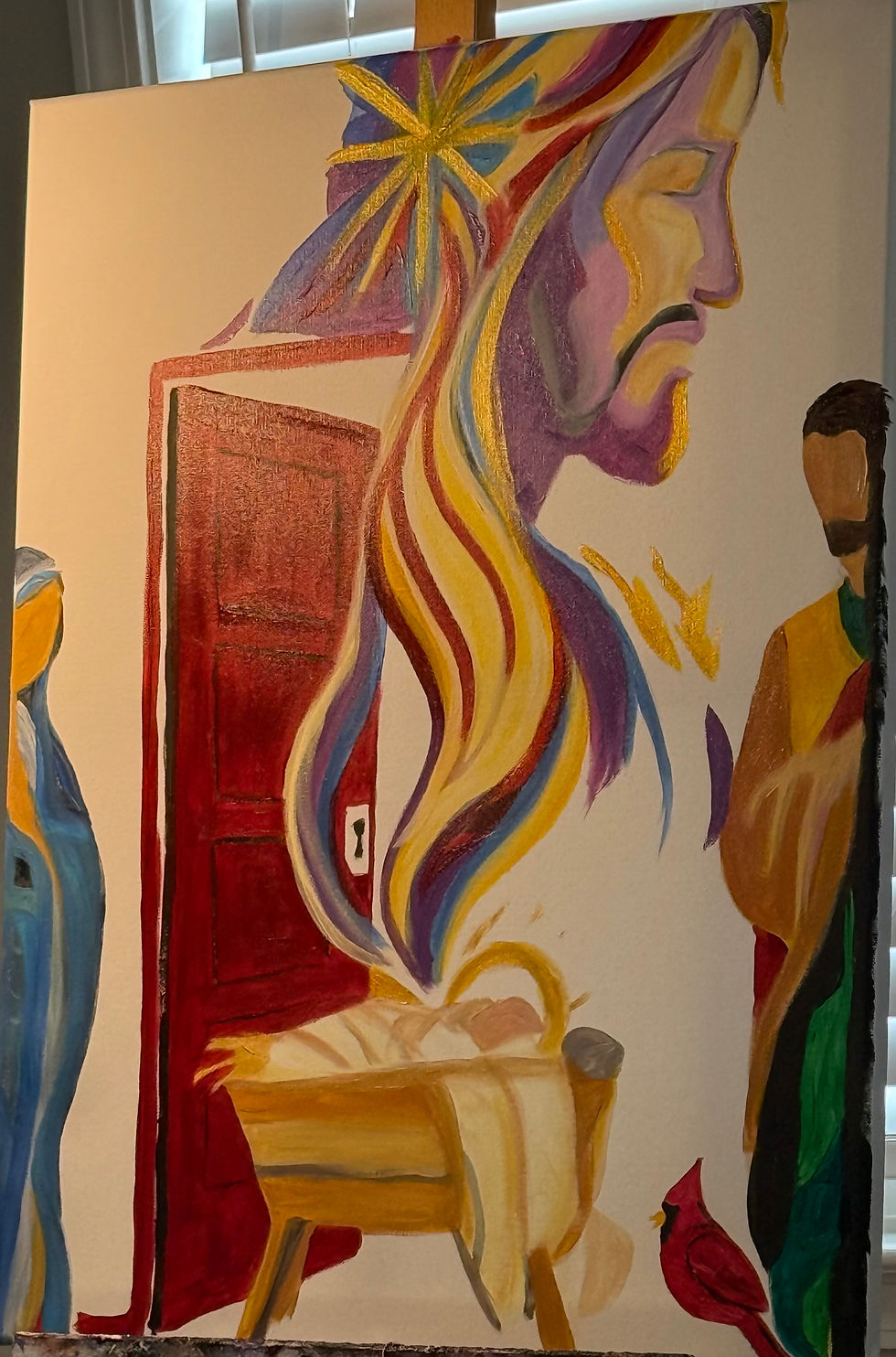

Prophetic sensitivity. Absolutely, 💯 deep calling to the deep in Christ Jesus! 🩸. Deborah Mayer